How Often Should Restaurant Equipment and Hood Systems Be Cleaned?
The NFPA 96 inspection schedule in plain words, the Food Code baseline, and a starting schedule for the equipment under the hood.
Last updated · 2 min read · Sources linked in the text
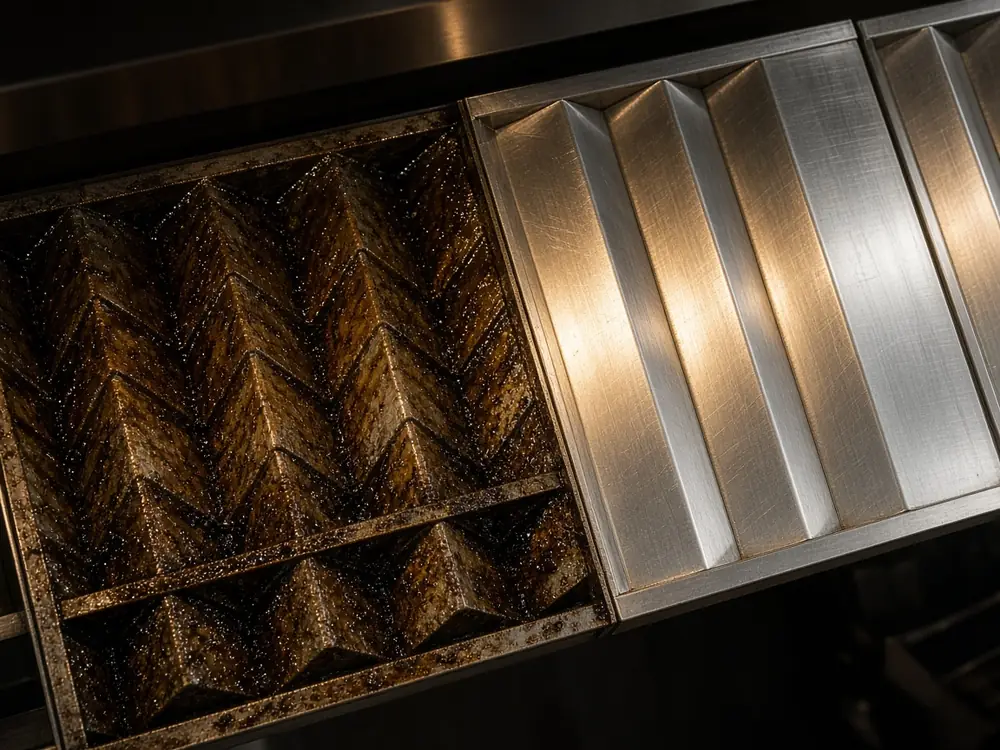
It depends on what you cook and how much. Some schedules are set by fire code, some by the health code, and the rest by how fast buildup comes back on your line.
The exhaust system: NFPA 96 sets inspection frequency
NFPA 96 is the fire standard for commercial cooking ventilation. Its schedule for inspecting exhaust systems for grease buildup is (Markel summary of NFPA 96, Table 11.4):
| Type of cooking | Inspection frequency |
|---|---|
| Solid fuel (wood, charcoal) | Monthly |
| High volume (24-hour cooking, charbroiling, wok) | Quarterly |
| Moderate volume | Semiannually |
| Low volume (churches, day camps, seasonal businesses, senior centers) | Annually |
The schedule is for inspection. Cleaning is required when the inspection finds grease buildup (Facilitec SW). In the 2024 edition this is Table 12.4. Local fire codes can be stricter.
Hood, duct and fan cleaning is a separate, certified service. It isn't what this guide's laser cleaning covers. Ask your exhaust cleaner for a dated certificate and the sticker that shows the next service date.
The equipment: the Food Code sets the baseline
The FDA Food Code covers the equipment itself:
- Food-contact surfaces used with time/temperature-controlled food are cleaned at least every 4 hours (4-602.11).
- Food-contact surfaces of cooking and baking equipment are cleaned at least every 24 hours (4-602.12).
- Cooking surfaces are kept "free of encrusted grease deposits" (4-601.11).
- Nonfood-contact surfaces are cleaned often enough that soil doesn't accumulate (4-602.13).
Daily cleaning keeps you inside those rules. What it misses is the slow layer: carbon that bakes onto grates, flat-top edges, fryer housings and racks over weeks.
A starting schedule for deep cleaning
Use your exhaust tier as a starting point for the equipment under the hood, then adjust to what you see:
| Kitchen | Deep-clean carbonized equipment |
|---|---|
| Solid fuel or very high volume | Monthly |
| High volume | Quarterly |
| Moderate volume | Semiannually |
| Low volume | Annually, or when buildup stops scrubbing off |
This is a planning guide, not a code requirement. Demo placeholder ArcLight's recommended intervals per equipment type
Signs you're behind
- Carbon that a scrub pad and degreaser no longer move
- Grates that look black even right after cleaning
- Grease dripping from filters or the hood lip
- An inspector noting buildup on equipment
More from the guide
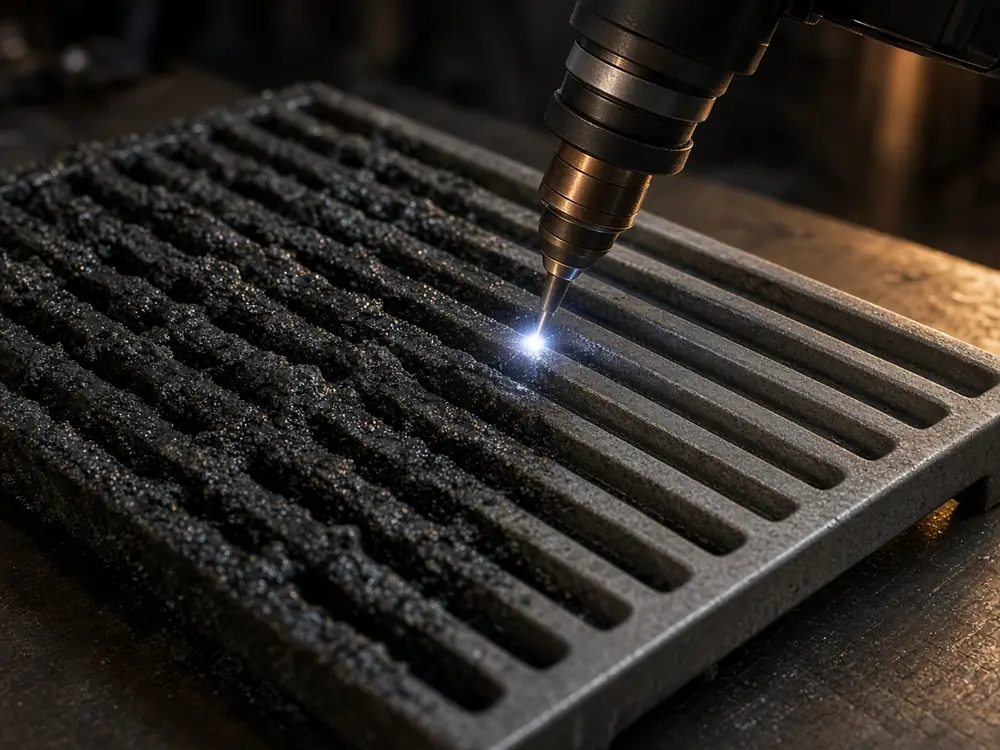
The Cost of Skipping Cleanings
Fire data from NFPA and USFA, what inspectors look for, and why the deep clean gets harder the longer you wait.
Read the guide →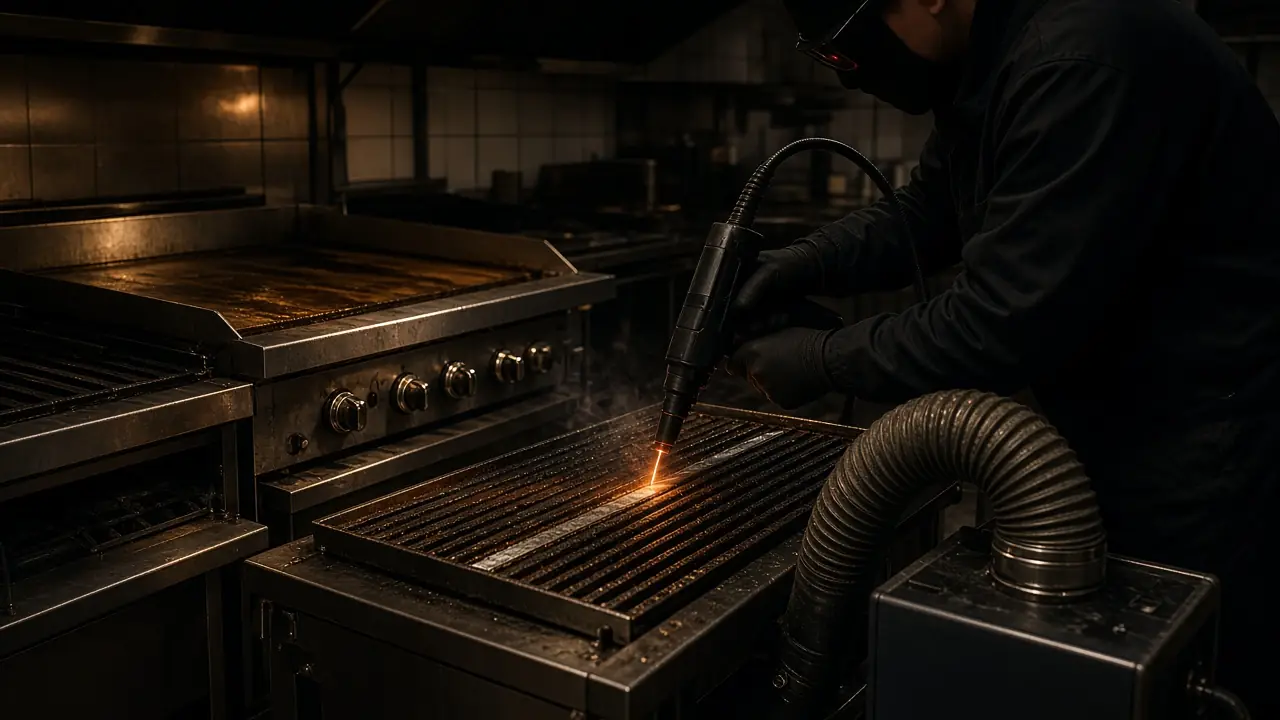
Laser Cleaning vs. Chemical Degreasers vs. Pressure Washing
What each method uses, what it leaves behind, what it's best for, and when not to use a laser.
Read the guide →What Surfaces Can Be Laser Cleaned (and Which Can't)?
Stainless, cast iron, carbon steel, aluminum and more, plus the materials and situations where a laser is a poor fit.
Read the guide →See what precision can do for your equipment.
Send us what you’re working with. ArcLight will look at the material, the buildup and your schedule, and tell you honestly whether laser cleaning is the right tool.
Request an asset assessment