Laser Cleaning vs. Chemical Degreasers vs. Pressure Washing
What each method uses, what it leaves behind, what it's best for, and when not to use a laser.
Last updated · 2 min read · Sources linked in the text
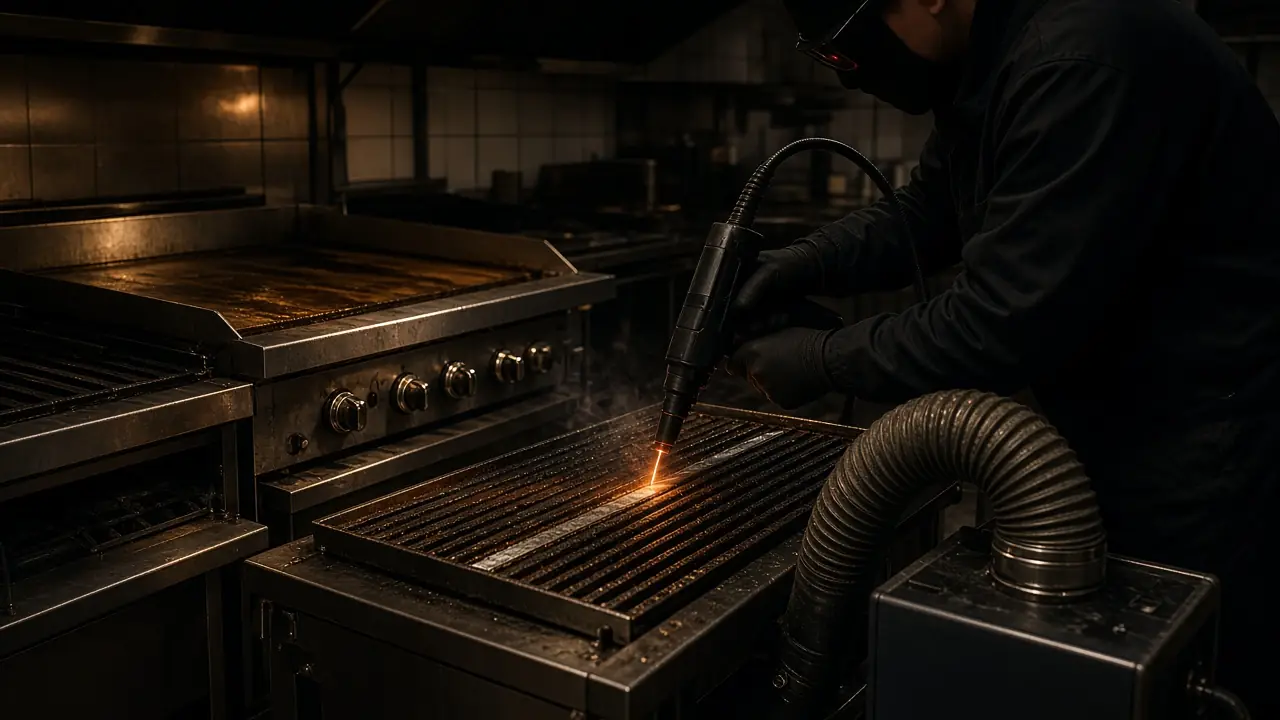
Each method has a place. Laser cleaning skips blasting media and chemical strippers, but it isn't the right tool for every job, and a provider who says otherwise isn't being straight with you.
Side by side
| Method | What it uses | What it leaves | Best for | Watch out for |
|---|---|---|---|---|
| Chemical degreaser / oven cleaner | Alkaline chemicals, often sodium hydroxide | Chemical residue to rinse; spent solution | Daily and weekly grease on light-to-moderate buildup | Caustic burns to skin and eyes (ATSDR); PPE and training needed |
| Pressure washing | Water, often with detergent | Greasy wash water that must reach the sanitary sewer | Large, simple, water-tolerant surfaces | Wash water kept out of storm drains (CASQA BG-61); water near electrical parts |
| Abrasive blasting, wire wheels, needle guns | Grit, brushes or impact tools | Spent media and debris | Fast bulk removal; creating an anchor profile | Noise, vibration and debris (NAVSEA); can abrade the base metal |
| Laser cleaning | Pulsed laser light, fume extraction | Captured fumes and particles | Baked-on carbon, rust and coatings on metal; working around parts you want to keep | Class 4 laser controls; line of sight only; strips seasoning; doesn't sanitize |
Chemical degreasers
Degreasers are the right daily tool. The problem is the heavy-duty end. Oven and grill cleaners often contain sodium hydroxide, which the CDC's toxic substances agency describes as highly corrosive and able to cause deep skin and eye burns (ATSDR). OSHA's accident records include restaurant workers burned by these cleaners (OSHA). And once grease has turned to carbon, chemicals work slowly, if at all.
Pressure washing
Pressure washing is fast and cheap on big surfaces that can take water. In a kitchen, the issue is where the water goes. Wash water with grease must not go into storm drains, gutters or streets. Local guidance says to wash mats and filters at a sink or contained area that drains to the sanitary sewer (Nashville; Portland).
Abrasive methods
Blasting is often faster than a laser for bulk removal over large open areas with thick coatings, and it's the right call when a coating spec needs a blasted anchor profile (Tri-State Laser Cleaning). In testing at Puget Sound Naval Shipyard, hearing protection was needed within 5 feet of the laser compared with 95 feet for a needle gun. The shipyard also said the laser "isn't a total replacement for all of the tools" (NAVSEA).
Laser cleaning
A laser removes bonded carbon, oxide and coatings without media or chemicals, and it's selective, so it can work around welds, fittings and parts you want to keep. The limits are real: it needs line of sight, it needs a controlled work area, thick wet grease should be scraped off first, and it removes cast-iron seasoning. It also doesn't sanitize. Food-contact parts still get washed, rinsed and sanitized.
When not to use a laser
- Light, fresh grease that a degreaser handles in minutes
- Plastic, rubber or clear glass parts
- Seasoned cast iron you want to keep seasoned
- Deep cavities or the inside of ductwork the beam can't see
- Large open areas with thick coatings where blasting is allowed
More from the guide
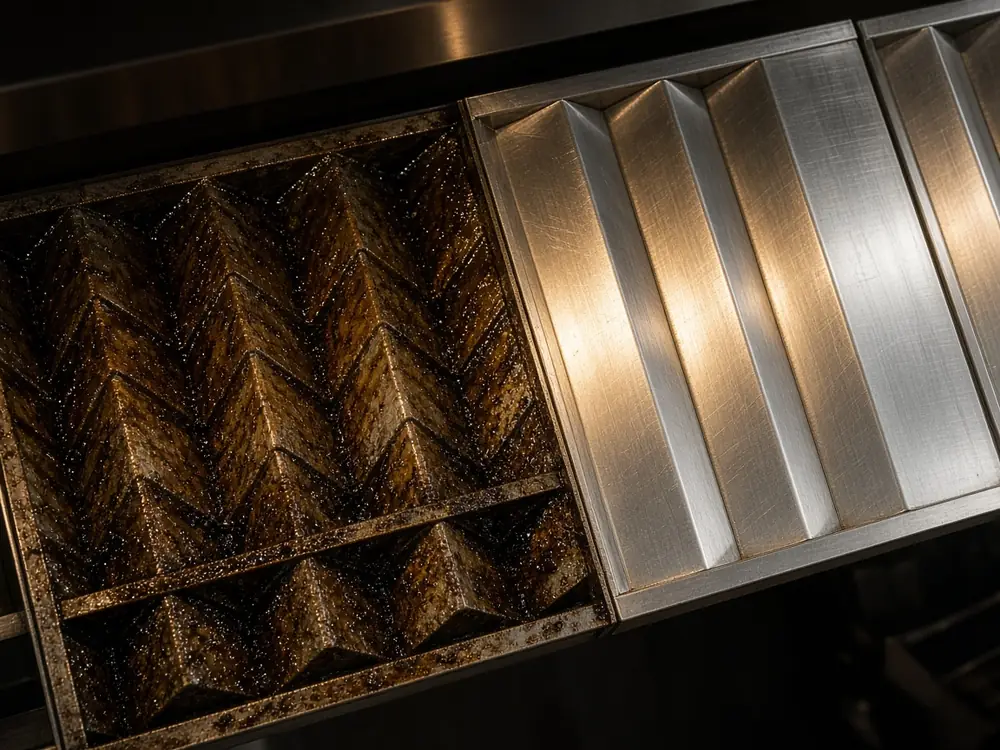
How Often Should Restaurant Equipment and Hood Systems Be Cleaned?
The NFPA 96 inspection schedule in plain words, the Food Code baseline, and a starting schedule for the equipment under the hood.
Read the guide →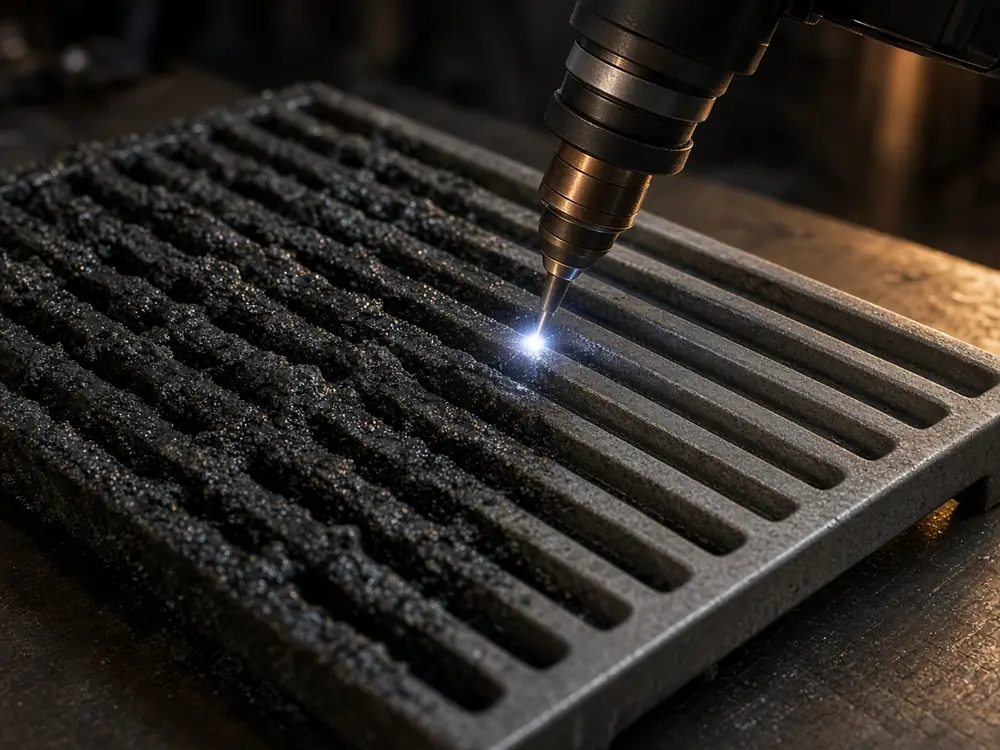
The Cost of Skipping Cleanings
Fire data from NFPA and USFA, what inspectors look for, and why the deep clean gets harder the longer you wait.
Read the guide →What Surfaces Can Be Laser Cleaned (and Which Can't)?
Stainless, cast iron, carbon steel, aluminum and more, plus the materials and situations where a laser is a poor fit.
Read the guide →See what precision can do for your equipment.
Send us what you’re working with. ArcLight will look at the material, the buildup and your schedule, and tell you honestly whether laser cleaning is the right tool.
Request an asset assessment