The Regular Cleaning Guide for Hard-to-Clean Equipment
How often to clean grates, flat tops, fryer and oven parts, racks and filters, what the fire and food codes say, where laser cleaning fits and where it doesn't. With printable checklists.
Last updated · 3 min read · Sources linked in the text
Some equipment gets wiped down every shift. Some gets ignored until it fails an inspection or stops working right. This guide is for the second group: grates, flat tops, fryer housings, racks, filters, carts and the metal fixtures where buildup bakes on. It covers how to set a schedule, what the codes actually say, where laser cleaning fits and where it doesn't, and what to ask any cleaning provider. Each article ends with a checklist you can print.
What "regular cleaning" means
Regular cleaning is a set schedule based on how fast a surface gets dirty, not a deep clean once something looks bad. The daily list handles what's touched every shift. The second list covers everything that builds up slowly enough that nobody notices until it's baked on.
The FDA Food Code sets the baseline most local health codes adopt. Cooking surfaces have to be kept "free of encrusted grease deposits and other soil accumulations" (4-601.11), and nonfood-contact surfaces have to be cleaned "at a frequency necessary to preclude accumulation of soil residues" (4-602.13). Your state or county adopts its own version, so check the local code too.
Why it matters: grease, fire and inspections
Grease buildup is fuel, and it shows up in the fire data. NFPA's study of 2010–2014 found an average of 7,410 structure fires a year in U.S. eating and drinking establishments. Cooking equipment was involved in 61% of them, and failure to clean was a factor in 22% (NFPA).
Inspections are the other reason. Health inspectors look at equipment surfaces, and fire inspectors check the exhaust service tag. Read more in the cost of skipping cleanings.
How often? It depends on what and how much you cook
Volume and cooking style set the pace. Fire code already works this way for exhaust systems: NFPA 96 sets inspection for grease buildup at monthly for solid-fuel cooking, quarterly for high-volume cooking, semiannually for moderate volume and annually for low volume (Markel summary of NFPA 96). Hood and duct cleaning is a separate certified service, but the same volume logic works for the equipment underneath.
The full schedule by item is in how often to clean restaurant equipment.
What laser cleaning is
Laser cleaning uses short pulses of laser light to remove rust, coatings, carbon and grease, with settings adjusted so the surface underneath is preserved as much as possible. There's no blasting media and no chemical stripper. The removed material becomes fumes and fine particles, which fume extraction captures at the work point. It's described in more detail on the technology page.
Where it fits, and where it doesn't
Laser cleaning is strongest on bonded carbon, oxide and coatings on metal, and weaker where the beam can't reach or the material can't take the heat. Plastics, most rubber and clear glass are poor candidates. It strips cast-iron seasoning. And it doesn't sanitize: food-contact parts are still washed, rinsed and sanitized before use. See what surfaces can be laser cleaned and laser vs. chemical vs. pressure washing.
Safety during laser cleaning
The beam and the fumes are both hazards, so the work area is controlled. Industrial cleaning lasers are usually Class 4: eye, skin and fire hazards, including from reflections (Laser Institute of America). OSHA lists local exhaust ventilation as a control for laser-generated airborne contaminants (OSHA). On site that means a marked area, laser-specific eyewear and extraction running the whole time. What to expect is in laser cleaning day.
Questions to ask any cleaning provider
- What surfaces won't you treat?
- How do you control the work area and the fumes?
- Do you test a spot first?
- What record do I get after the job (date, what was cleaned, condition, photos)?
- How are food-contact parts handled afterward?
- Do you clean exhaust hoods and ducts, and if not, who do you refer?
Six guides, each with a checklist
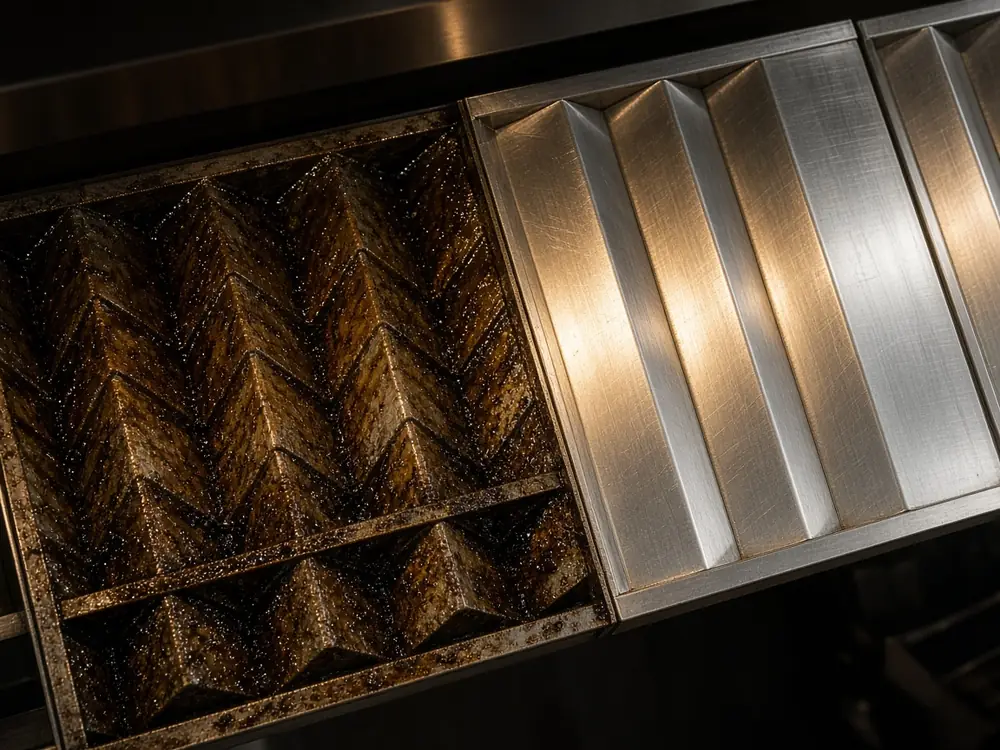
How Often Should Restaurant Equipment and Hood Systems Be Cleaned?
The NFPA 96 inspection schedule in plain words, the Food Code baseline, and a starting schedule for the equipment under the hood.
Read the guide →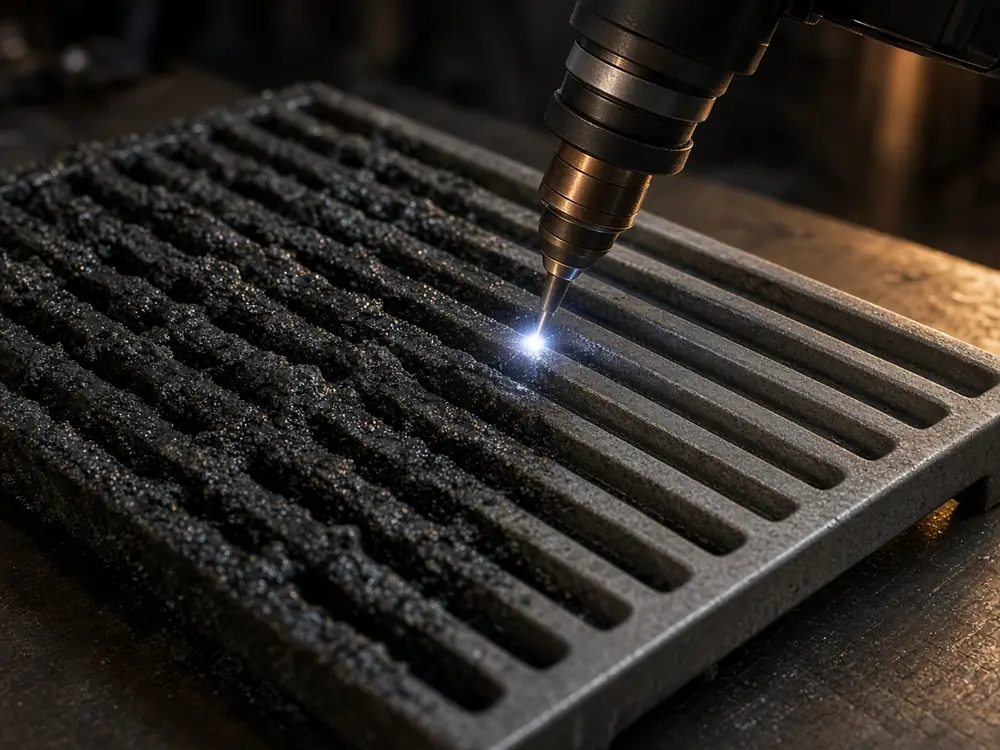
The Cost of Skipping Cleanings
Fire data from NFPA and USFA, what inspectors look for, and why the deep clean gets harder the longer you wait.
Read the guide →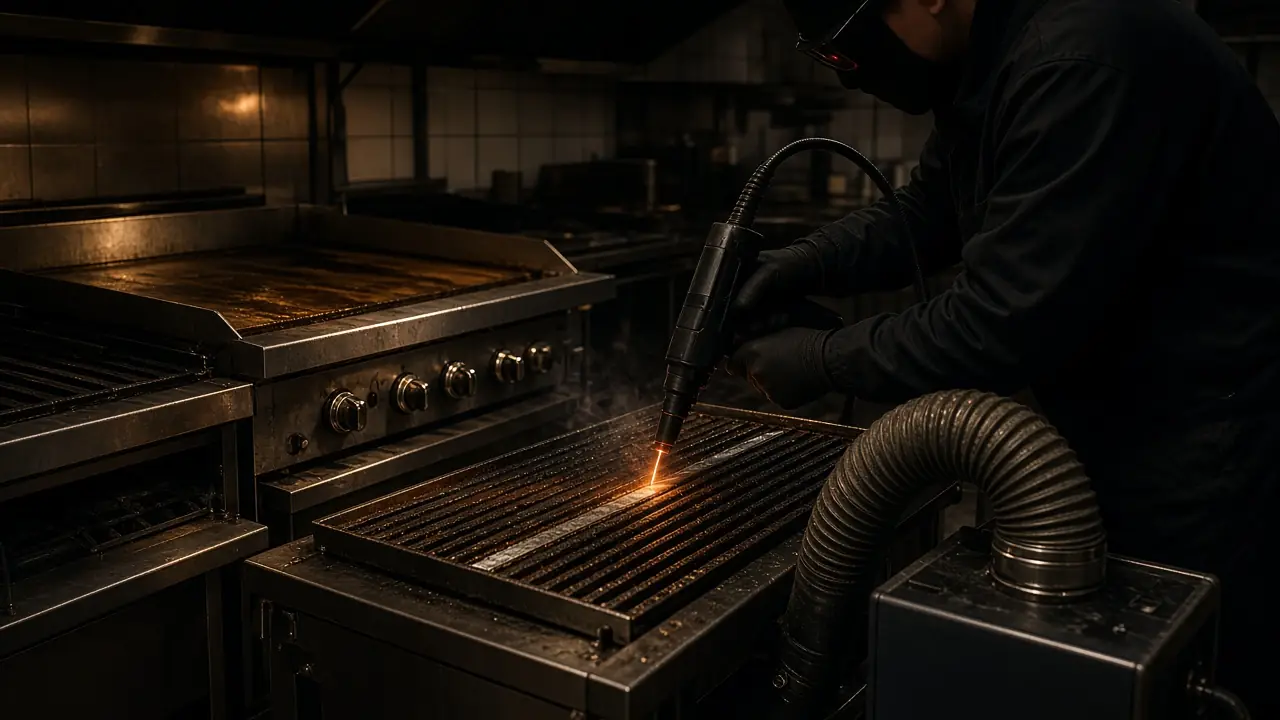
Laser Cleaning vs. Chemical Degreasers vs. Pressure Washing
What each method uses, what it leaves behind, what it's best for, and when not to use a laser.
Read the guide →What Surfaces Can Be Laser Cleaned (and Which Can't)?
Stainless, cast iron, carbon steel, aluminum and more, plus the materials and situations where a laser is a poor fit.
Read the guide →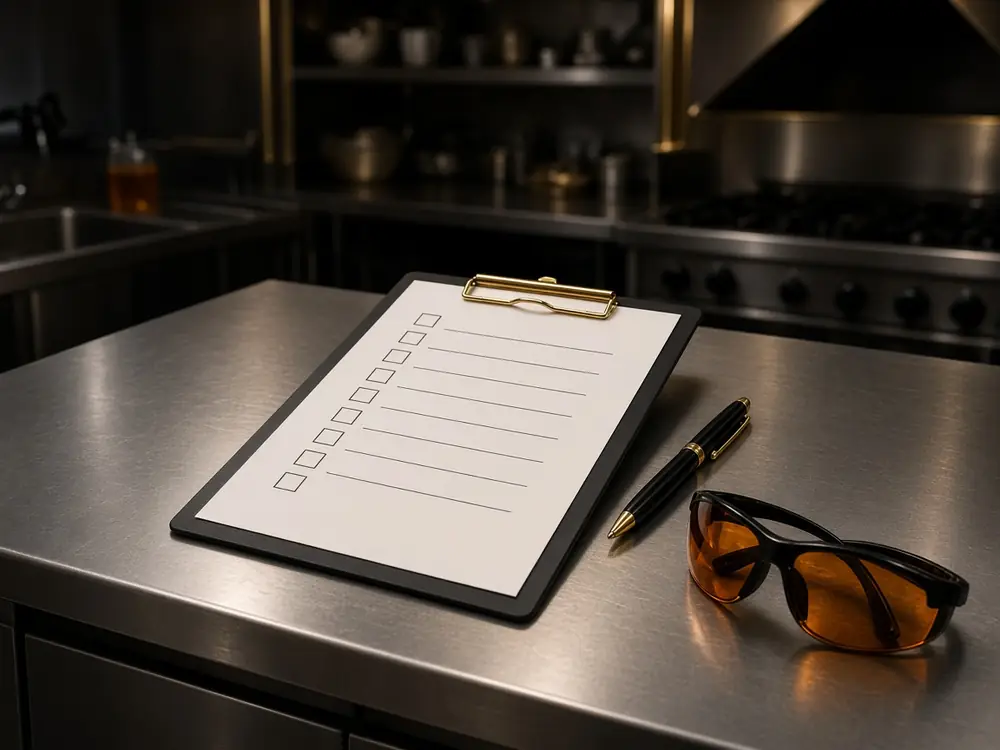
What Happens on Laser Cleaning Day: Prep, Safety and Getting Back to Work
Before, during and after a visit, plus the records that help at inspection time.
Read the guide →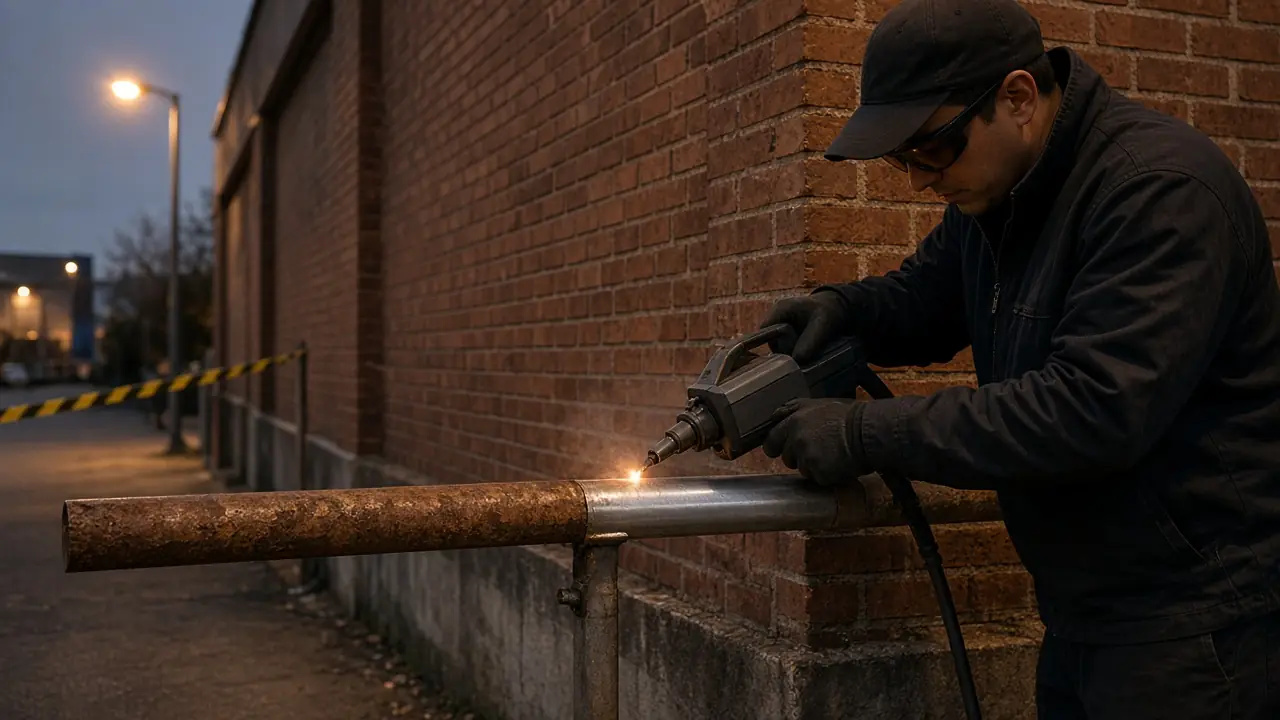
Rust on Patio Furniture, Rails and Outdoor Fixtures: When to Strip It Back
Spotting rust early on rails, gates and patio furniture, and what laser removal does versus sanding and strippers.
Read the guide →Guide questions
What is laser cleaning?
Laser cleaning uses short pulses of laser light to remove rust, coatings, carbon, grease and other buildup from a surface. The settings are adjusted to the material so the buildup comes off and the surface underneath is preserved as much as possible. It's a non-contact process, so there's no blasting media or chemical stripper involved.
Does laser cleaning use chemicals or water?
The laser itself uses no chemicals and no blasting media. The removed material becomes fumes and fine particles, which are pulled away by fume extraction at the work point. Food-contact parts still get a normal wash, rinse and sanitize afterward.
Can laser cleaning damage the metal underneath?
It can if the settings are wrong. Too much power, too much overlap or repeated passes can roughen a surface or leave heat tint on stainless steel (PMC study on 304L stainless). That's why every job starts with a test spot and settings matched to the material.
What can't be laser cleaned?
Plastics, most rubber and clear glass are usually poor candidates, and deep cavities the beam can't see are out of reach (Tri-State Laser Cleaning). Laser cleaning also removes cast-iron seasoning, so seasoned surfaces have to be re-seasoned. If another method fits the job better, we'll say so.
Is laser cleaning better than pressure washing?
For baked-on carbon on metal parts, a laser can remove buildup without soaking the area or producing greasy wash water. Pressure washing is cheaper for large, simple surfaces, but grease-laden wash water has to be kept out of storm drains (Nashville stormwater guidance). The right answer depends on the item and what's on it.
Is laser cleaning safe to do around staff?
It's safe when the work area is controlled. Industrial cleaning lasers are typically Class 4, which means eye, skin and fire hazards, including from reflected light (Laser Institute of America). Staff stay out of the marked area, the operator wears laser-specific eye protection, and fume extraction runs at the work point.
What happens to the grease and carbon that comes off?
It's turned into fumes and fine particles, which have to be captured. OSHA lists local exhaust ventilation as a control for laser-generated airborne contaminants (OSHA), so extraction runs at the work point the whole time. Demo placeholder ArcLight's extraction and filtration equipment
Is laser cleaning safe on stainless steel?
Yes, with the right settings. Stainless can be cleaned without grinding or scratching, but too much heat input can cause discoloration (heat tint) and affect corrosion resistance (PMC study). We test a small spot and check the finish before doing the whole piece.
One useful cleaning idea, once a month.
The ArcLight newsletter: one cleaning idea, one seasonal reminder and one recent job. Short enough to read before prep. Read a sample issue.
See what precision can do for your equipment.
Send us what you’re working with. ArcLight will look at the material, the buildup and your schedule, and tell you honestly whether laser cleaning is the right tool.
Request an asset assessment