What Happens on Laser Cleaning Day: Prep, Safety and Getting Back to Work
Before, during and after a visit, plus the records that help at inspection time.
Last updated · 2 min read · Sources linked in the text
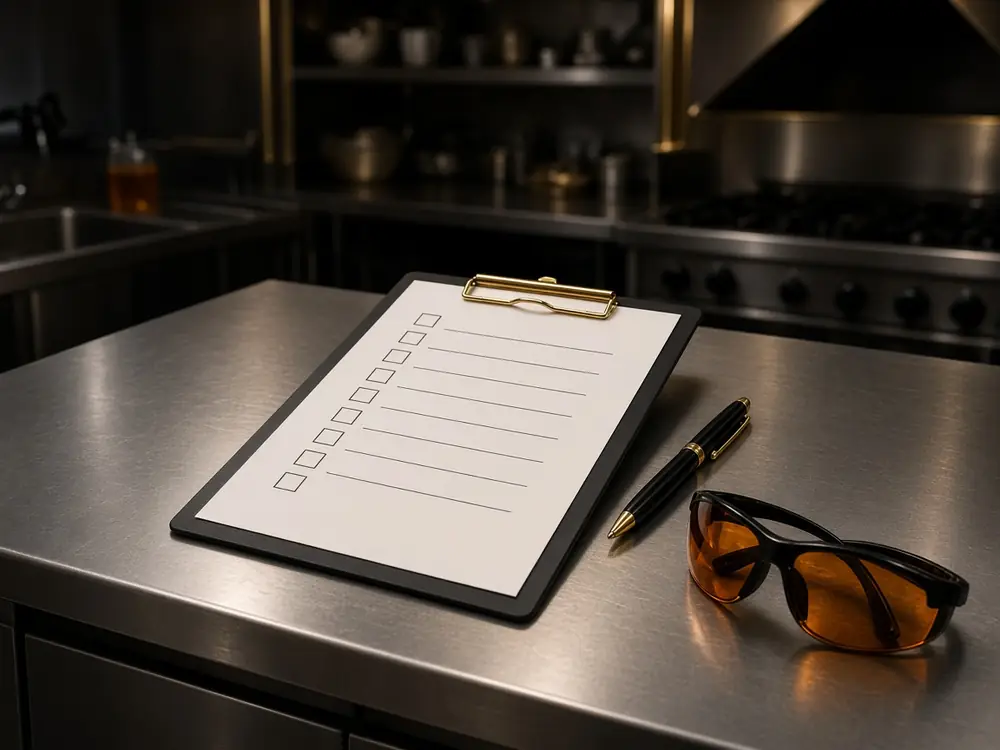
A laser cleaning visit needs cool equipment, a cleared work area and a plan for putting food-contact parts back into service. Here's what that looks like. Exact timing depends on the equipment and the buildup. Demo placeholder ArcLight's typical visit length and hours
Before the visit
- Equipment off and cool. Hot surfaces and laser work don't mix.
- Area cleared. Food, utensils, paper and anything flammable out of the work zone.
- Parts to protect. Plastic knobs, gaskets and covers removed or masked.
- Power and space for the laser and the fume extraction unit.
- Staff briefed on which area is off-limits.
During the work
The work area is marked and controlled. Industrial cleaning lasers are typically Class 4, an eye, skin and fire hazard, including from reflected light (Laser Institute of America). The operator wears laser-specific eye protection, and anyone entering the area needs it too. Fume extraction runs at the work point, which is the control OSHA lists for laser-generated airborne contaminants (OSHA).
The job starts with a test spot so you can see the result and the settings can be confirmed.
After the work
- Food-contact parts are washed, rinsed and sanitized per your local health code (FDA Food Code 2022).
- Reassemble and check everything before service.
- Keep the record. A dated record with what was cleaned, condition found and before-and-after photos.
Inspection-ready records
Keep these together where a manager can find them:
- Exhaust system certificate and hood sticker from your exhaust cleaner, with the next-due date
- Fire suppression system tag, serviced at least every six months (Markel)
- Equipment deep-cleaning records and photos
- Your cleaning schedule, posted
Some fire marshals publish their own checklists. Flower Mound, Texas, is one example (Flower Mound Fire Marshal). Ask yours.
More from the guide
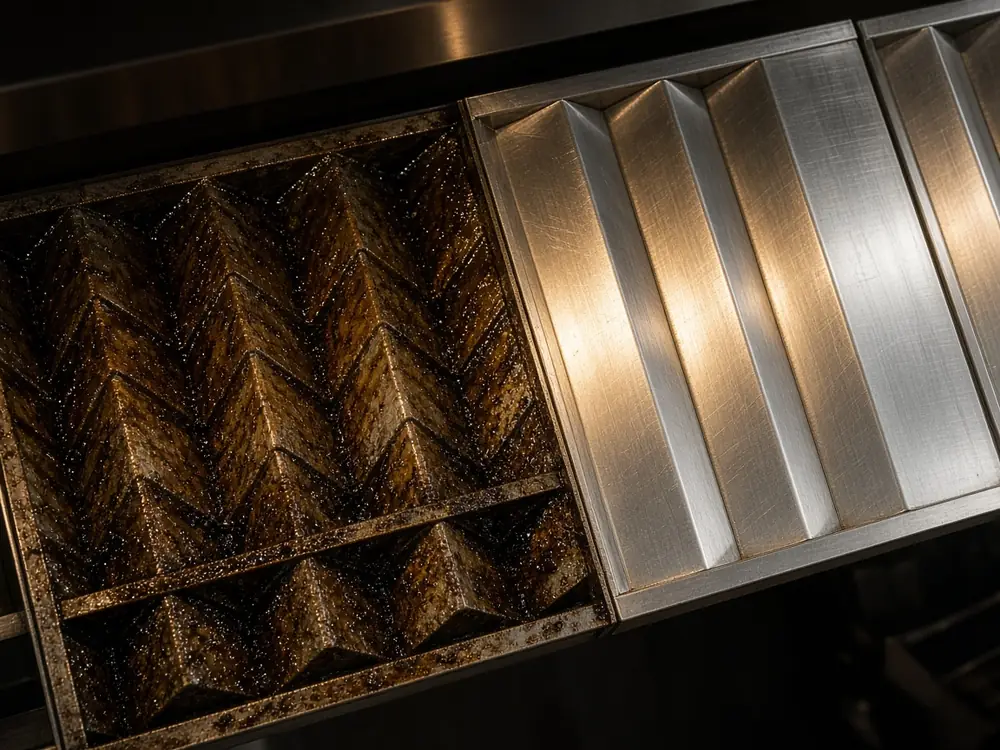
How Often Should Restaurant Equipment and Hood Systems Be Cleaned?
The NFPA 96 inspection schedule in plain words, the Food Code baseline, and a starting schedule for the equipment under the hood.
Read the guide →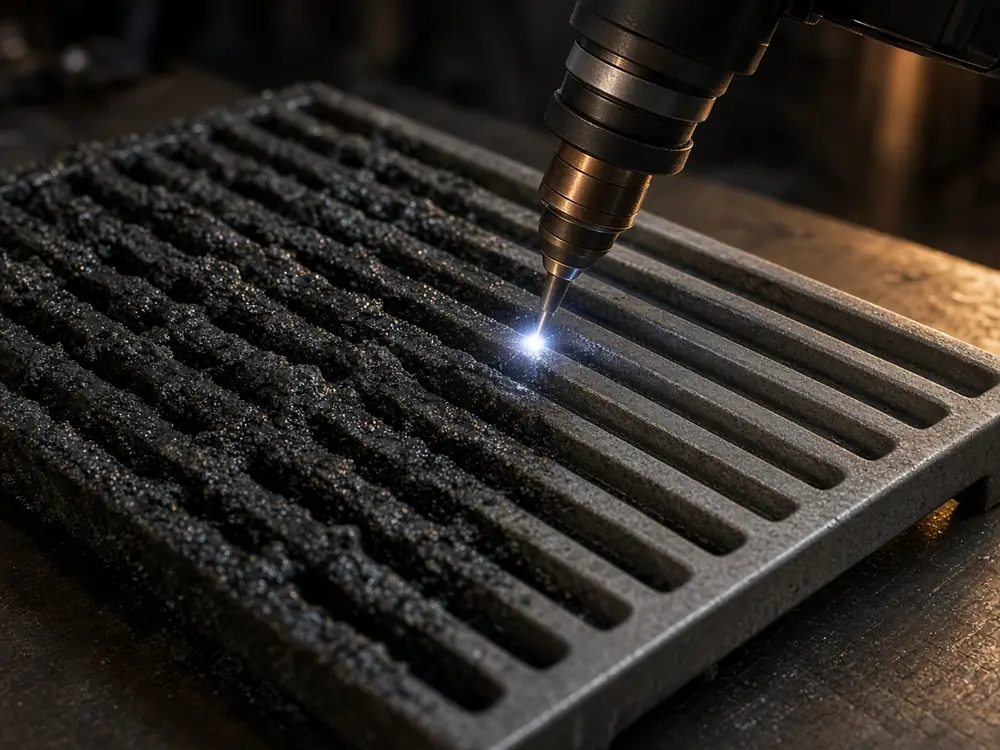
The Cost of Skipping Cleanings
Fire data from NFPA and USFA, what inspectors look for, and why the deep clean gets harder the longer you wait.
Read the guide →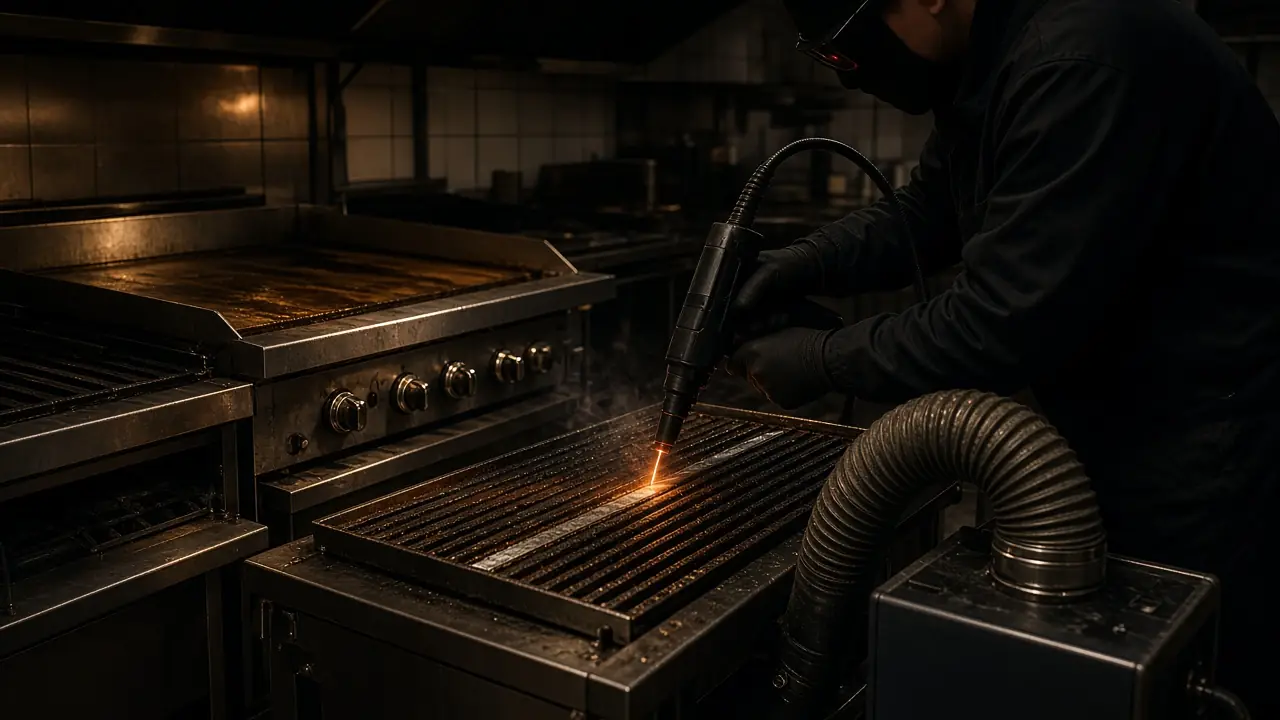
Laser Cleaning vs. Chemical Degreasers vs. Pressure Washing
What each method uses, what it leaves behind, what it's best for, and when not to use a laser.
Read the guide →See what precision can do for your equipment.
Send us what you’re working with. ArcLight will look at the material, the buildup and your schedule, and tell you honestly whether laser cleaning is the right tool.
Request an asset assessment